 Live Chat
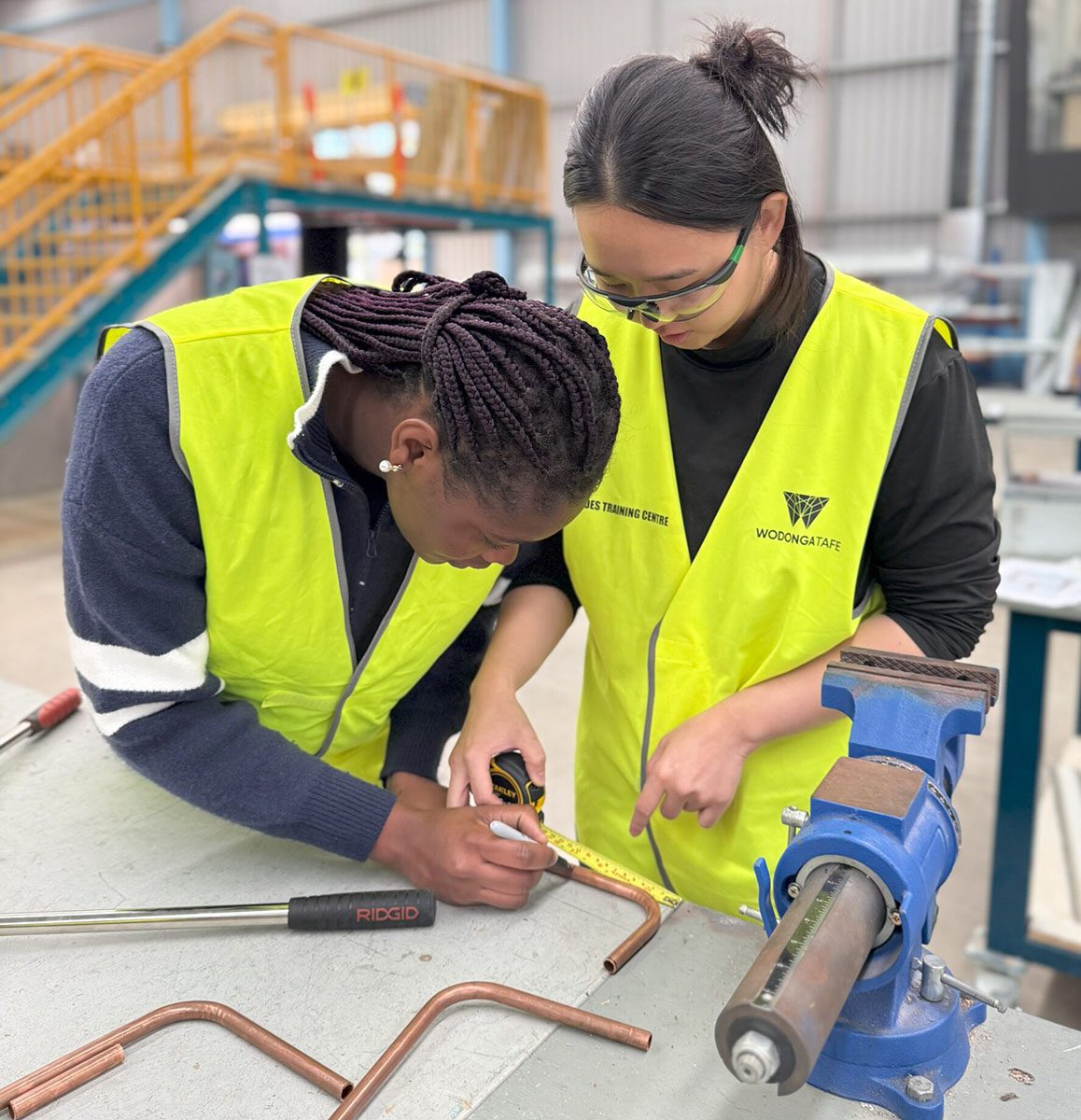
Practical steps employers can take to support women in trades
With research showing that increasing the proportion of women in hands-on trades improves inclusiveness, communication and problem-solving as well as attitudes to bullying, there are some compelling reasons why encouraging more women into hands-on trades is good for business.
According to a Strategic Review of the Australian Apprentice Incentive System, women made up 8.9% of all apprentices training across all hands-on trades in December 2023. The report also highlighted that, 54% of hands-on trade occupations were experiencing labour shortages, compared with 25% for occupations with more balanced gender ratios. With qualified tradespeople in short supply, looking to recruit more women could be the solution to a more stable workforce for your business.
To find out more, we spoke to Jasmine Mishra, the National Education Partnership Manager from Empowered Women in Trades, about the benefits of hiring women in trades roles and what you can do as an employer to support women into trades.
Why is it important to have more women in trades?
Firstly, it’s important to build workforce sustainability. Australia is facing significant skills shortages across construction, infrastructure and manufacturing. We simply cannot meet demand while recruiting from only half the population. You can also create better business outcomes by building diverse teams are more innovative, safer, and better at problem-solving. Different perspectives improve communication, customer service and workplace culture. Employing women in trades, you are also contributing to providing equity and opportunities for women, providing them with financially stable, meaningful and highly skilled careers. Women deserve access to those pathways, and young girls deserve to see that they belong there.
When women enter trades, it’s not about “filling quotas.” It’s about building stronger industries.
How can tradespeople make women more respected and included on worksites?
It is important to note that inclusion is built in everyday behaviour, including treating great women as tradespeople first, not as a novelty. Respect is cultural and is modelled from the top and reinforced by peers. This includes shutting down inappropriate comments immediately and avoiding “jokes” that single someone out. Knowledge should be shared equally, not excluding women from technical tasks and sharing hands-on learning opportunities fairly. Managers and colleagues backing up women publicly in front of clients and other contractors also makes a huge difference. Displaying these behaviours will create a more inclusive worksite for women and automatically create a more inclusive worksite for ALL humans.

How can employer managers support this?
Managers set the tone at any workplace and clearly state that respectful behaviour towards women is expected and non-negotiable helps to create appositive workplace culture. Providing structured onboarding and pairing apprentices with supportive supervisors is also essential to make them feel welcome. This includes making sure that PPE is properly fitting and available. If issues, do arise, address them early, rather than waiting for complaints. Track how your apprentice is doing and focus on staff retention, not just recruitment. Remember also that psychological safety is not “soft.” It directly impacts retention and performance.
What are some small things employers can do to support women apprentices?
Often it’s the small practical details that matter most, like providing female-specific PPE and uniforms and making sure there are clean, accessible amenities. Avoid leaving women isolated on worksites. Give clear expectations and structured learning goals, and don’t forget to celebrate milestones (first solo job, first client lead, etc.). Ask them regularly: “What support do you need to succeed?”
How can constructive feedback be given to women apprentices and trainees?
The same way it should be given to anyone – clearly, directly and respectfully. Make sure you focus on skills and behaviours, not personality. Be specific: “Here’s what went well” and “Here’s what to improve.” Avoid over-softening or under-challenging and provide coaching, not criticism. Make sure that you separate performance feedback from bias about their gender or culture.
Women don’t need protecting from feedback, they need access to growth opportunities.
What benefits do employers find from having more women in trades roles?
Employers who take on women in trades roles consistently report improved team communication, stronger attention to detail. and increased apprentice attention. This results in higher customer satisfaction and an enhanced company reputation. It also gives access to a broader talent pipeline. Inclusive companies also attract younger workers who prioritise values-driven workplaces.
Are you able to share a success story of an employer getting it right?
We’ve seen multiple employers who started with one female apprentice, invested in supervisor training, actively addressed inappropriate behaviour, ensured women were given complex technical tasks and promoted based on merit and performance.
Within a few years, they didn’t just have one woman, they had a culture shift. Retention improved across the whole workforce, not just for women. When inclusion is intentional, it becomes self-sustaining.
What is the role of Empowered Women in Trades and how do you support employers?
EWIT works across the full pipeline, from early engagement with girls in schools through to providing support for inclusive apprenticeship pathways. We also build industry awareness by providing career education, employer advice, culture-building workshops, and Lunch & Learn events with industry. We don’t just encourage women into trades; we work with employers to ensure the environment is ready for them.
Where can I get support to make my business more inclusive for women?
Employers can engage with Empowered Women in Trades (EWIT) and become an Alliance member to gain access to mentoring programs and industry Lunch & Learn events. You can also review your workplace policies and onboarding processes and partner with group training organisations like CVGT Employment. Seeking guidance from state and federal workforce initiatives can also be helpful.
Remember, inclusion isn’t a one-off initiative. It’s a business strategy.
Register your interest in employing an Apprentice or Trainee
Register your interest in becoming a Host Employer for an Apprentice or Trainee with CVGT Employment.
Fill out your details below and we will be in touch or call us on 132 848 if you have any questions.